Anthropic shares jump 17% in record-breaking stock debut
The maker of Claude raised $107 billion in total funding, capping the largest initial public offering in history despite ongoing debt and unprofitability.
By Amanda Valdez ·
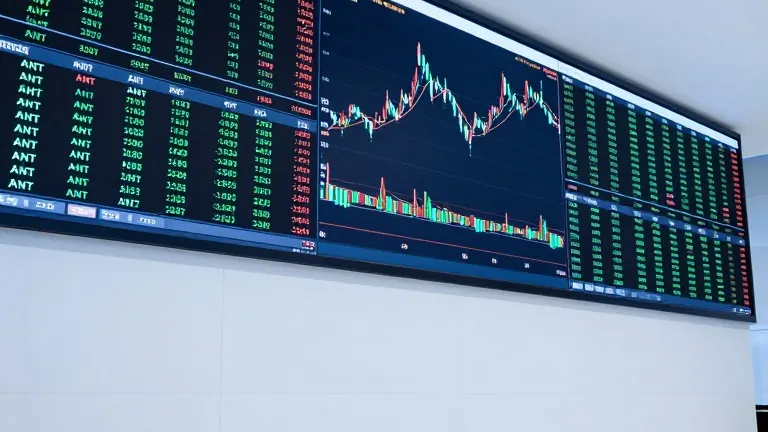
Employees and executives of Anthropic became millionaires and billionaires, respectively, on Thursday as the San Francisco-based company closed its initial public offering with shares up 17% at $97.17. The stock, trading under the ticker ANT, briefly crossed the $2 trillion valuation mark before settling at a lower level.
The offering surpassed SpaceX to become the largest IPO in history. Anthropic sold 980 million shares to the public at an initial price of $83 each, generating $81 billion in proceeds. The company also executed a private sale of $26 billion in shares on the same day. Combined, the two transactions raised $107 billion for a business that is not yet six years old.
The pricing came in higher than the company's earlier range of $70 to $78 per share. Dan Ives, a financial analyst at Yorkville Ives & Co., described the debut as a victory for the tech sector following recent volatility surrounding Nvidia. He noted that the pricing indicated strong investor demand despite broader market anxiety.
Anthropic faces financial hurdles alongside its market success. The company holds $6.2 billion in debt, which it describes as substantial in financial filings. It remains unprofitable under standard accounting rules. A recent report revealed that Anthropic has signed leases and deals requiring $900 billion in spending on computing power and infrastructure over the coming years, including $70 billion in the next 12 months.
CEO Dario Amodei addressed public concerns about AI safety during the debut. He stated that demonstrating a successful company can prioritize safety will inspire the rest of the industry. Amodei also highlighted practical benefits, noting that the Claude tool helps scientists accelerate research. He pointed to the reduction of diseases like polio and smallpox as a benchmark for future medical progress.
Regulatory pressure is expected to increase as the new Congress convenes. Newly elected Democrats have vowed to scrutinize the industry, while Democratic governors in Texas and Georgia have signaled they will halt new data center construction in their states. These political shifts add to existing fears about a potential AI bubble and the high costs of infrastructure.
The company competes with OpenAI, Google, and other major players in a sector where leading firms are currently spending more than they earn. Rich Lesser, global chair of Boston Consulting Group, predicted that market valuations for AI companies would fluctuate for years but trend upward. He described the achievements of the leading firms as remarkable despite the difficulty in predicting the exact flow of capital.
More Business · Unethical Practices · Report a business · Got a Story?