
New theory locates the source of consciousness in the brain stem
A new study from Hebrew University researchers argues that the brain stem, not the cerebral cortex, is the origin of basic conscious experience.
By Marek Collins ·
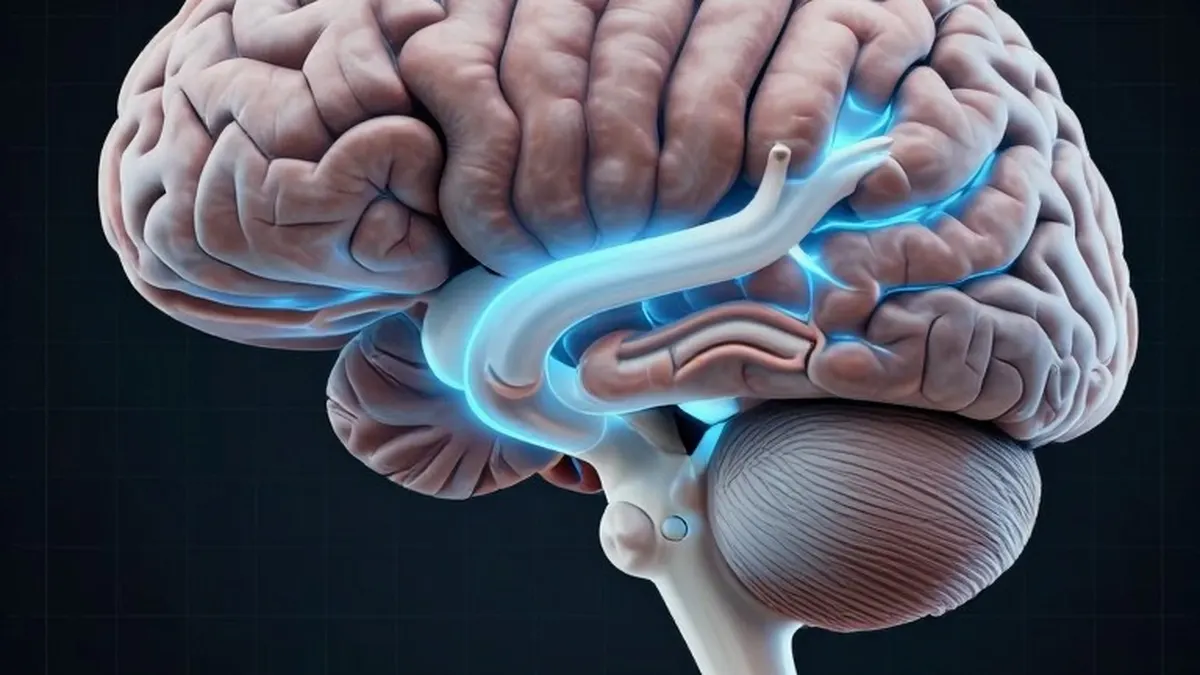
Researchers at the Hebrew University of Jerusalem have proposed a new hypothesis suggesting that the brain stem, rather than the cerebral cortex, is the primary source of basic human consciousness. This idea challenges long-held scientific views that attribute conscious experience largely to the brain's outer layer. The study, titled 'Brainstem Theory of Consciousness,' was recently published in the journal The Neuroscientist by Prof. Marshall Devor and Dr. Mark Baron.
The brain stem is an evolutionarily ancient structure located at the base of the brain. It acts as a vital control center for autonomic functions and serves as the main pathway for motor and sensory signals. While the cerebral cortex handles complex tasks such as language, planning, and recognition, the new theory posits that brain stem circuits are responsible for making sensory information consciously felt.
Devor and Baron argue that the capacity to feel and experience originates in this older, primitive circuitry. They distinguish between the robotic processing of information, which the cortex handles like a self-driving car, and the subjective feeling of experiencing that information. According to their model, the cortex provides detailed data about the world, while the brain stem shines the light of subjective experience on aspects that deserve conscious attention.
The researchers base their case heavily on evidence from pain research. They note that detecting a harmful stimulus and feeling pain are disconnected entities. The nervous system can trigger reflexive withdrawals from danger without the subjective sensation of hurt. Devor explained that even extensive cortical damage often leaves pain experience intact or even increased, whereas such damage can severely degrade vision and hearing. In contrast, damage to specific brain stem regions consistently causes comas, suggesting this area is critical for maintaining consciousness.
The paper highlights the mesopontine tegmentum, a region of the brain stem, as a key area for this function. Previous research has linked circuits in this region to comas following brain injuries and loss of consciousness during anesthesia. The authors suggest that investigating this area and its connections could help test the theory and explore how neural activity becomes subjective experience. They emphasize that the brain stem filters out background noise, sending only the most important signals to the conscious mind.
Devor, who joined the university's Institute of Life Sciences after studying at Princeton and MIT, believes this distinction helps explain why damage to specific cortical regions can eliminate abilities like object recognition without erasing basic awareness. He described the 'Me Inside,' or raw awareness, as originating in the brain stem. While complex processing requires the mammalian neocortex, basic sensory processing was well established in the brain stem long before that evolution occurred.
The researchers acknowledge that the precise biological mechanism remains unresolved, but they propose this framework to guide future investigation. Devor noted that while imaging techniques like functional MRI and CT scans focus on the cortex, the small and bony-enclosed brain stem is difficult to image. However, he believes advancing technology will allow for more selective manipulation and monitoring of brain stem activity to test these ideas.
If the theory is proven correct, it could significantly impact how physicians assess consciousness in patients with severe brain injuries, comas, or disorders of consciousness. Devor stated that understanding this mechanism could help individuals trapped in comas. He also called for greater involvement from anesthesiologists in research, noting that their current role often focuses solely on inducing and reversing sleep rather than understanding the underlying processes of consciousness.
The study suggests that the most basic feeling of being conscious has ancient roots in evolution, while the richness of human experience reflects the later development of more powerful information processing. Devor believes that rudimentary forms of consciousness may have existed in reptiles or even fish, given their primitive vision and sensory processing capabilities in the brain stem.
Ultimately, the paper aims to shift scientific attention toward the brain stem in the quest to understand how the brain creates the fundamental experience of being present and feeling the world from the inside.