AI Video of Sánchez's Wife Draws Court Challenge
A complaint filed by a former Socialist official seeks removal of the clip, which had reached nearly 2 million views by Friday.
By Noor Morgan ·
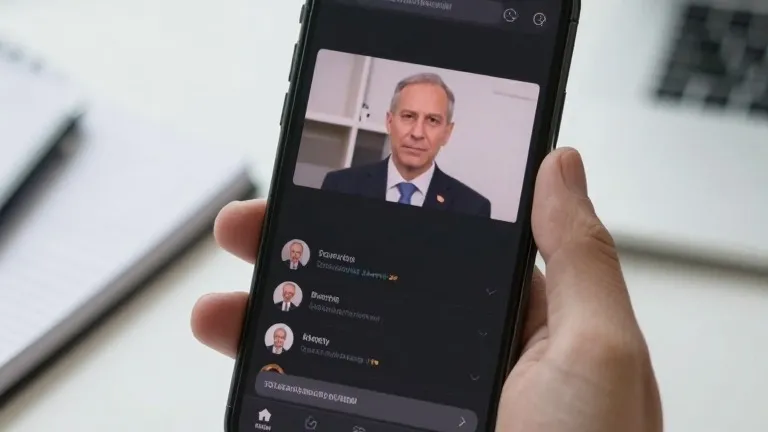
Spain's main opposition party released a video this week that generated fake footage of Prime Minister Pedro Sánchez's wife and other figures tied to his Socialist party. The clip portrays Begoña Gómez, Sánchez's wife, describing how she obtained a university position through her husband's role. It also depicts former Socialist prime minister José Luis Rodríguez Zapatero discussing concealing jewellery in a safe. Both Gómez and Zapatero deny any wrongdoing, and both situations are subject to active investigations.
The People's Party (PP) distributed the video on its own social media channels. By Friday, the footage had drawn close to 2 million views. Digital transformation minister Óscar López addressed the matter on broadcaster TVE, stating, "It's telling people a colossal lie, and for a party to do it on its official accounts seems intolerable to me." López observed that the disclosure identifying the content as AI-generated appeared in faint text at the bottom of the clip, noting that viewers unfamiliar with the technology could mistake the fabricated dialogue for authentic recordings.
Leire Díez, a former Socialist party member whose image was used in the production, filed a court complaint against the PP on Friday. Her filing requests that the party take down the advertisement at once. Díez alleges the video constitutes defamation and digital identity theft. According to the report, she claims the clip's reference to her pertains to accusations that she attempted to weaken judicial and law enforcement institutions for the benefit of the Socialists.
Assessment among legal specialists leans toward the party's position. A group of nine legal experts consulted by El País indicated that the video does not violate the law because it carries a label identifying the content as AI-generated and is presented as satire. Íñigo Navarro, former dean of the law faculty at Madrid's Comillas Pontifical University, stated that the context makes clear the subjects did not utter those words. Juan Antonio Lascuraín, who teaches criminal law at the Autonomous University of Madrid, said that whether a video is legal differs from whether it is proper or politically correct.
José Javier Olivas, an associate professor at Spain's National University for Distance Education who researches populism, conspiracy theories and AI biases, said he considered the party's use of the technology regrettable. He noted that while both major parties have attacked rivals' morality, this video went beyond a "red line." He added that attributing fabricated statements to others qualifies as disinformation.
The People's Party has rejected the criticism. Party figure Borja Sémper said a problem would exist only if there was malicious intent to convince viewers that the figures actually spoke the lines. He stated that the video uses digital tools to expose Socialist hypocrisy, and that everyone can see how it was made.
Election officials have set the general vote for 29 November. Most polls indicate that the PP will take the most seats but will require backing from the far-right Vox party to establish a government.
Related activity concerning AI-generated political spots is also occurring in the United States ahead of next month's midterm elections. Researchers at Wesleyan University identified over 200 ads using AI, with the majority connected to Republican candidates. Erika Franklin Fowler, co-director of the Wesleyan Media Project, reported that spending on AI-generated ads amounted to less than $50,000 during the 2024 cycle, and said much of the current advertising of this kind contains no disclaimer.
Source: The Guardian
More Politics · World news · Report a business · Got a Story?