Voters Reject Trump's $5,000 Dividend Promise as Democrats Seize Congress
Democrats won both chambers Tuesday, nullifying the condition for the payout that Speaker Johnson said still needs legislative action.
By Marek Collins ·

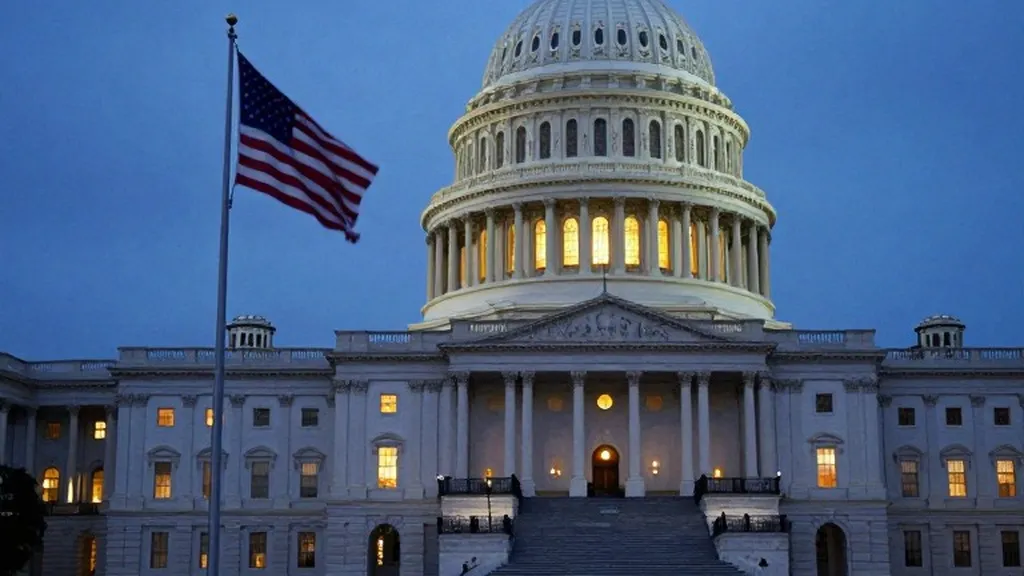
President Donald Trump’s campaign promise to send a $5,000 check to every adult American if Republicans retained control of Congress has been rendered moot by Tuesday’s election results. Democrats won a decisive majority in both the House and Senate, meaning the condition for the so-called Trump dividend was not met. The Associated Press reported that Democrats took control of the House with 233 seats to 138 for Republicans, while also gaining the Senate majority. This outcome leaves the president with a divided government and a Democratic Congress that will likely scrutinize the mechanics of the proposed payment.
The promise was made at the Republican Midterm Convention in Dallas last week. Trump told the crowd, 'If the Republicans win, you win with us and you get $5,000. It will be called the Trump dividend.' He framed the payout as a reward for the nation’s economic success, comparing it to corporate shareholder distributions. The administration had no formal plan for the checks, and the White House press release provided no details on how Americans would receive the funds. The cost was estimated at over $1 trillion, a sum that would have strained the federal budget significantly.
Even before the election, the proposal faced questions about its legal and fiscal viability. House Speaker Mike Johnson, who is not seeking reelection, said on Sunday that the payments needed congressional approval. 'I would assume, yes, he'd need Congress to act, and that's a creative idea,' Johnson told reporters. Trump initially suggested Congress might not be necessary, though he did not specify how he could spend such a vast amount without lawmakers' authorization. Johnson pledged to work through the process, stating that Congress would find consensus on the issue like they do for other major policy decisions.
Bipartisan criticism of the plan was immediate. Some Republicans questioned the price tag and the precedent it set. Texas Representative Chip Roy wrote on social media that 'Dependency is evil and soul-sucking in all its forms.' Democratic leaders pointed to the timing of the announcement, suggesting it was an attempt to buy votes in a close race. Election law expert Rick Hasen noted that while the promise is likely legal under First Amendment protections for campaign rhetoric, it was unusual for an incumbent president to make such a specific financial pledge tied to an election outcome.
PolitiFact analyzed the feasibility of the payment and found that the biggest payout is far from certain. The outlet noted that the administration cited tariff revenues as a potential funding source, but the One Big Beautiful Bill Act did not include a separate tariff dividend. Senator Bernie Moreno of Ohio said he would introduce legislation to fund the proposal, but political analysts argued that the bill was unlikely to secure the required 60-vote supermajority in the Senate. The payment would have required a new law to be passed, a difficult task even with a Republican majority, let alone with the slim margins the party held before Tuesday.
The economic context made the promise particularly contentious. The AP Voter Poll indicated that about 6 in 10 voters disapproved of how Trump was handling the presidency, with many citing the cost of living and high gas prices as primary concerns. The war with Iran had driven up energy costs, and inflation remained a persistent issue. Kenneth Rogoff, a former chief economist at the International Monetary Fund, warned that spending $1.2 trillion on checks would blow up the national debt and increase the odds of a debt crisis in the coming years. He noted that the U.S. was already running an unsustainable deficit.
The redistricting efforts that Trump championed to help Republicans hold the House also failed to produce the desired result. Republicans redrew maps in eight states, hoping to gain seats in the Rio Grande Valley of Texas and other areas. However, Democrats won most of the targeted seats, including those held by Henry Cuellar and Vicente Gonzalez in Texas. The AP reported that the redistricting plan was systematically dismantled, with voters choosing Democratic candidates despite the new boundaries. This shift underscored the strength of the Democratic wave, which was driven by dissatisfaction with the administration's handling of the economy and foreign policy.
With Democrats now controlling both chambers, the focus shifts to how the new Congress will handle the administration’s agenda. House Democratic Leader Hakeem Jeffries, who is expected to become the first Black speaker of the House, said the party is ready to work hard to deliver on the change voters demanded. The incoming Democratic majority is expected to launch a robust oversight agenda and pursue a 100-day plan to lower the costs of gas, groceries, and other goods. They also aim to reverse cuts to the Affordable Care Act and Medicaid programs, priorities that were central to the campaign.
The outcome of the election has significant implications for the administration’s final two years. Trump, who has spent time recently justifying the construction of a new White House ballroom, now faces a Congress that is poised to challenge his policies. Vice President JD Vance blamed the war in Iran for the Republican losses, while Trump struck a conciliatory tone, suggesting he could work with Democrats but warning of gridlock. He threatened to use the power of the presidential veto to strike down their agenda, saying he did not want to be sitting there vetoing everything for two years.