Kansas pumpkin growers rely on drip irrigation and bought stock to offset drought losses
Extreme heat and uneven rainfall reduced crop yields, forcing some farms to purchase pumpkins from other growers to meet autumn demand.
By Noor Morgan ·
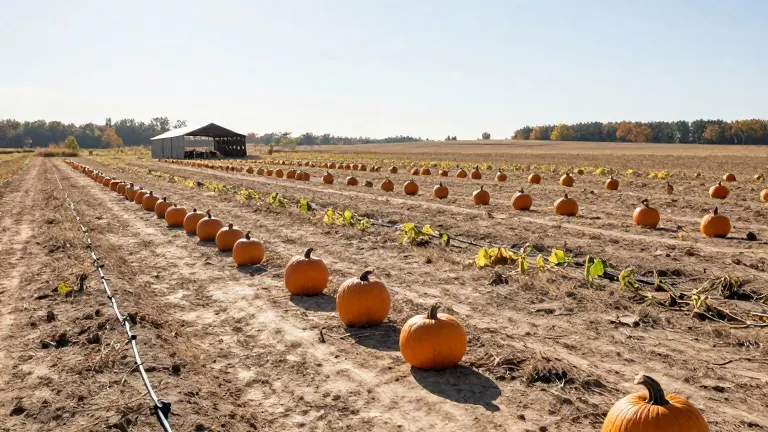
Kansas pumpkin farmers faced a difficult growing season this year as extreme heat and erratic rainfall damaged crops across the state.
Meteorologists described the summer as a historic drought, with some areas recording the driest conditions since the Dust Bowl era. In certain counties, total rainfall fell below one inch. Other regions experienced heavy early rains followed by intense heat. This weather pattern created a challenging environment for pumpkin cultivation. Some farms could not open for the fall season due to low yields. Others purchased pumpkins from outside sources to meet customer demand.
Debbie Klausmeyer owns Klausmeyer Farm and Pumpkin Patch in Clearwater. The family began growing pumpkins in 2007 to supplement their dairy farm. They plant the crop in early June and rely on a drip watering system to manage moisture. Klausmeyer said the system helped the farm survive the dry summer. She noted that she stopped the irrigation for only two days. The heat remained intense even when some rain fell. The lack of consistent moisture prevented the pumpkins from branching out normally. Hot summer nights stunted their growth. The resulting harvest consists mainly of smaller pumpkins, roughly the size of a volleyball. Customers have asked about the missing large carving pumpkins. Klausmeyer attributes the change directly to weather conditions.
The farm planted more pumpkins than usual this year, anticipating a wet summer similar to 2025. The additional plants and a late frost that extended the growing season helped mitigate some losses. Klausmeyer also noted that other crops, including soybeans and wheat, were affected by the drought. She described the operation as intense but necessary for a farming family. The farm offers activities such as pig races, tractor rides, and a corn maze to draw visitors despite the smaller harvest.
Tom Brown, owner of Meadowlark Farm Orchard and Cidery near Wichita, also experienced crop damage. He invested about $1,000 in seeds and labor for the pumpkin patch. A seven-inch rain event in June washed out many plants, killing approximately 30% of the crop. The rain also washed away herbicide, leading to severe weed growth. A subsequent period of oppressive heat caused further damage. Brown observed rot and sunburn-like symptoms in the pumpkins by mid-August. Stress from the heat also attracted insects and disease.
Brown irrigates his crops using water from two ponds, which he pumped dry during the summer. He had to choose between saving the pumpkin crop or the apple trees. The apple trees took priority. Brown purchased a significant quantity of pumpkins from another farm to stock his patch. He told customers about the source of the pumpkins. The farm also relies on other crops, such as peaches and strawberries, to offset the pumpkin losses. Brown stated that the upfront costs were lost, but the farm recovered through these alternative revenue streams.
Klausmeyer said Kansas farmers must adapt to unpredictable seasons. She quoted the local saying that Kansas is Kansas. She added that it is difficult to predict the weather. Brown agreed that transparency with customers helps maintain trust during difficult years. Both farms continue to operate their fall events. The season remains the busiest time of year for these operations. The farmers are now preparing for the winter months.
Source: KCUR 89.3
More Business · Unethical Practices · Report a business · Got a Story?