How A WhatsApp Channel Reversed Brazil's Election
A campaign group run by Congressman André Janones grew to 10.8 million followers between the two rounds of voting.
By Noor Morgan ·
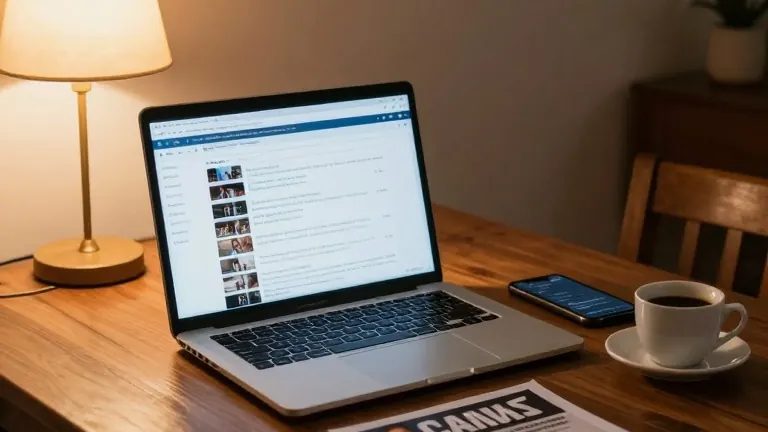
A WhatsApp channel set up to back President Luiz Inácio Lula da Silva expanded to 10.8 million followers, and allies now credit it with helping reverse the race. Lula had trailed challenger Flávio Bolsonaro but closed the gap in three weeks.
Congressman André Janones led the operation, which was called Lula's Army. Supporters posted videos, pushed hashtags and recruited voters. Messages sent to the channel often included ready-made templates for followers to send to friends and family. Each template assigned a task aimed at raising Lula's visibility online.
Janones posted instructions to his 'troops' such as 'Guys, urgent!', 'Don't go to sleep yet', 'No food before the mission!', and 'I have one more task before you're dismissed'. On the eve of the vote, he hosted a 24-hour live broadcast called the 'turnaround livestream' while polls still pointed to a Bolsonaro win.
Some Workers' Party members worried that Janones's confrontational style on social media could clash with the more moderate image they wanted for Lula. In his victory speech, Lula called Janones 'our General' and thanked him for 'raising the morale of our troops every day'.
The growth of the channel came after years in which supporters of former President Jair Bolsonaro dominated online political organizing, particularly on WhatsApp and Telegram. Since Bolsonaro's 2018 election win, WhatsApp networks have been a central part of campaigning in Brazil.
Measuring how much online organizing moves votes remains difficult. Political scientists say they cannot say how many votes, if any, the WhatsApp operation changed.
Political scientist Denilde Holzhacker points instead to a change in the campaign's approach. She said the Workers' Party joined online work with organizing on the ground and tied a Bolsonaro win to possible changes in social programs and lost rights. 'It was to Lula's credit that he recognised his own weakness and completely changed his style,' she said. 'And Janones managed to do something that had seemed unthinkable for Brazil's left - dominate social media.'
Sociologist Mayra Goulart, who teaches at the Federal University of Rio de Janeiro, also points to work beyond screens. 'It was a combination of social media and street-level mobilisation,' she said. 'The physical world enabled a form of mobilisation capable of reducing abstention and persuading undecided voters.' She said this effort raised turnout and also reached undecided voters.
In his victory speech, Lula said the campaign taught him lessons and that he would change how Brazil is run. 'We are going to give people a greater say in decision-making, and digital communication will play a much bigger role in my government,' he said.
Janones posted the instructions to his 'troops' such as 'Guys, urgent!' and 'Don't go to sleep yet'. On the eve of the vote, he ran a 24-hour live event called the 'turnaround livestream' while polls still pointed to a Bolsonaro win.
Denilde Holzhacker, a political scientist, points instead to a shift in campaign strategy. She said Lula's team joined online work with organizing on the ground and tied a Bolsonaro win to concerns over social programs and rights. 'It was to Lula's credit that he recognised his own weakness and completely changed his style,' she said. 'And Janones managed to do something that had seemed unthinkable for Brazil's left - dominate social media.'
Mayra Goulart, a sociologist and political scientist at the Federal University of Rio de Janeiro, said the result came from more than screens. 'It was a combination of social media and street-level mobilisation,' she said. 'The physical world enabled a form of mobilisation capable of reducing abstention and persuading undecided voters.' She said the push also reached voters who had not yet chosen a candidate.
Source: BBC News