NASA Locks In 2028 Moon Landing Strategy With Major Orbital Shifts
The space agency revealed a revised architecture that moves critical docking maneuvers from lunar orbit to near-Earth space, aiming to streamline the path for both SpaceX and Blue Origin.
By Neha Iyer ·
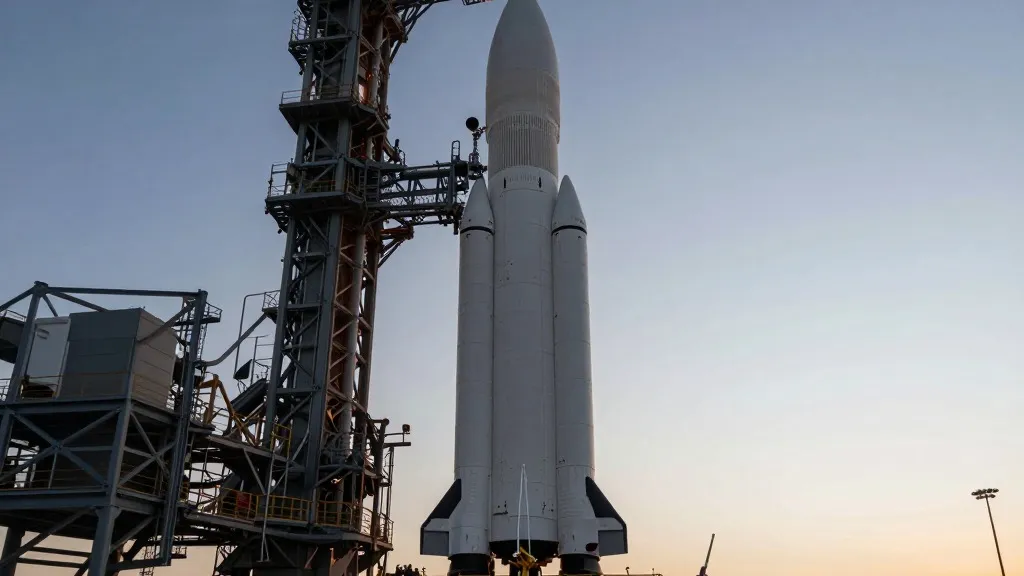
NASA has officially detailed a revamped roadmap for returning humans to the Moon, targeting a 2028 landing while resolving a long-standing technical hurdle with the Orion capsule. The announcement, made during a comprehensive briefing on Friday, marks the first time the agency has laid out these specific architectural changes in public, signaling a decisive shift in how the Artemis program will execute its most complex missions.
The most significant alteration involves the interaction between the Orion spacecraft and SpaceX’s Starship vehicle. Under the new plan, Orion will dock with the Starship lunar lander in high-Earth orbit rather than in the difficult near-rectilinear halo orbit previously required around the Moon. This change eliminates a major energy-intensive maneuver that had complicated the mission profile for years, effectively streamlining the transit to the lunar surface.
For Blue Origin, the agency outlined a distinct approach that relies on four separate launches of the New Glenn rocket. Notably, this architecture does not include any in-space refueling operations between spacecraft, a significant departure from other complex logistics models. The plan does, however, allow for the Blue Moon lander to rendezvous with Orion in low-Lunar orbit, providing a flexible option for the mission’s final stages.
NASA officials reaffirmed their timeline for the upcoming demonstration missions, stating they continue to anticipate launching Artemis III by the summer of 2027. This mission will serve as a critical test, involving docking maneuvers with both the Blue Moon and Starship vehicles in the vicinity of Earth. Following this, the agency is tracking toward a 2028 launch for Artemis IV, which is designed to achieve the actual crewed landing on the lunar surface.
NASA Administrator Jared Isaacman emphasized the agency's confidence in the revised strategy, stating, “This is an achievable path we are on right now.” He noted that the administration has the necessary mandate, resources, and stakeholder support to execute the plan effectively. His comments reflect a leadership team that has re-evaluated every element of the program to accelerate progress and assist the lunar lander partners.
The decision to move docking activities to high-Earth orbit addresses a primary concern raised by SpaceX engineers in early 2026. The previous requirement to dock in the near-rectilinear halo orbit was seen as demanding more energy and presenting other technical difficulties. The cancellation of the Lunar Gateway earlier this year inadvertently solved this problem for SpaceX by removing the need for a permanent orbital outpost, thereby simplifying the operational requirements for the Starship lander.
While the new architecture offers a clearer path forward, questions remain regarding the agency's ability to hold these aggressive dates. The leadership has taken a hard look at the program to facilitate execution, but the complexity of coordinating two different lander systems still presents substantial challenges. The success of the 2027 demonstration will be crucial in validating the revised approach before the final push for the 2028 landing.
This update represents a pivotal moment for the Artemis program, moving from theoretical planning to a concrete, detailed execution strategy. By acknowledging the substantial changes in the architecture, NASA aims to align its goals with the capabilities of its commercial partners. The focus is now on maintaining momentum and ensuring that the logistical hurdles of the past do not recur in the new operational framework.
Source: Ars Technica