UNM and Columbia Students Excavate Abandoned Penitente Morada in Dixon
Archaeological work and oral history in the Embudo Valley revealed adobe walls and sparked renewed interest in local religious traditions.
By Noor Morgan ·
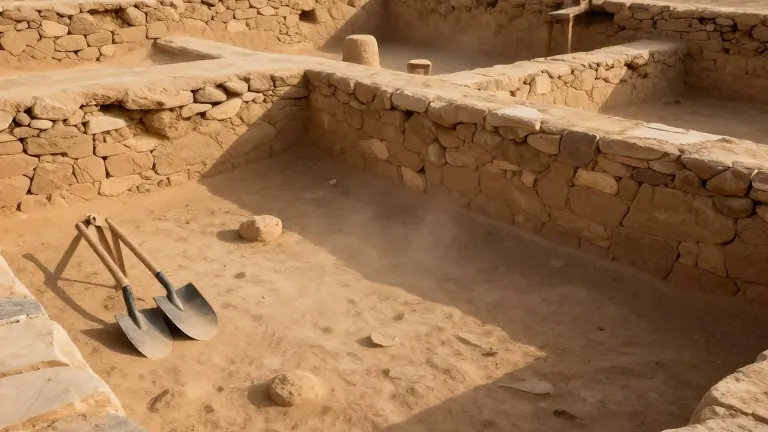
University of New Mexico students, alongside peers from Barnard College and Columbia University, excavated an abandoned Penitente morada in Dixon during the summer of 2026. The team uncovered sections of adobe walls, stone foundations, an altar area, and a rosary at the religious gathering site. Their work combined physical excavation with conversations with community members to document local history.
Levi Romero, an associate professor emeritus at UNM, taught the course with Severin Fowles, a professor at Columbia University and Barnard College. The group consisted of six UNM students and ten students from the New York institutions. They focused on the intersection of Indigenous and Hispano cultures in northern New Mexico, as well as the methods used to study the Embudo Valley’s heritage.
Romero selected the site after presenting on morada history during Dixon's 300th anniversary celebration last December at the Embudo Valley Library. The course aimed to link academic research with community activism. Students also assisted Picuris Pueblo with preparations for its Día de San Lorenzo feast day on August 10 and helped repair La Capilla de Nuestra Senora de Los Dolores in Pilar for its September 15 feast day.
Valerie Chavez, a doctoral student in Chicana and Chicano Studies at UNM, participated in the class for the third time. She noted that community knowledge gave meaning to the archaeological work, while excavation allowed the team to document a place whose physical remains had largely disappeared. In a reflection paper, Chavez wrote that the experience showed archaeology is not just about recovering objects, but also about preserving memories and honoring traditions that might otherwise vanish.
The students presented their findings to the community at the end of the course. They also invited local guest speakers to share insights and history related to the work. Some materials from the project are now on display at a permanent exhibit at the Embudo Valley Library.
Romero stated that the class demonstrates how university courses can collaborate with communities and other academic institutions to offer alternative learning approaches. He and Fowles have co-taught the field class since 2018 and plan to continue with further fieldwork and oral history documentation. The course is cross-listed at UNM in departments including Native American Studies, Anthropology, Geography, and the School of Architecture and Planning.
Romero expressed hope for establishing an archive center in the village to house and exhibit the materials. He identified the abandoned Sala Filantropica dance hall, which is owned by Rio Arriba County, as a potential location for such a center.
Source: UNM Newsroom