Aardman Co-Director Defends Clay Animation
Matthew Walker argues that the physical fingerprints in stop-motion puppets distinguish them from artificial intelligence, as 'Shaun the Sheep: The Beast of Mossy Bottom' opens the Lucca Comics festival.
By Noor Morgan ·
Matthew Walker, co-director of the new 'Shaun the Sheep' film, is in Lucca, Italy, to defend the value of handcrafted clay animation against the rise of artificial intelligence. The third feature in Aardman Animations' spinoff franchise, 'Shaun the Sheep: The Beast of Mossy Bottom', is the opening film for the 60th edition of Lucca Comics and Games. The event takes place on the eve of Halloween, which is also the setting for the movie's plot.
Walker arrived in the medieval Tuscan town to meet with the Italian press. The first question from journalists focused on whether the handmade nature of the film serves as a counterpoint to the expanding use of AI in filmmaking. Walker described himself as a geek, a sentiment that resonated with the audience at the event.
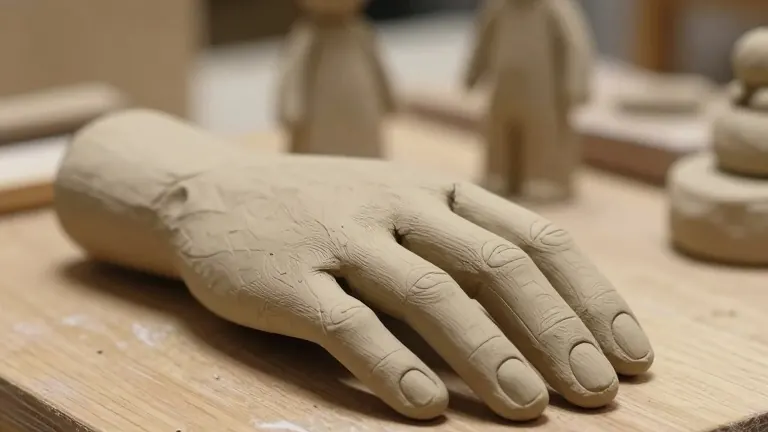
In a subsequent interview, Walker explained why he believes AI does not currently threaten Aardman's work. He emphasized the tactile physicality of stop-motion, noting that audiences appreciate the knowledge that the models are real and built with detail by artists. Behind-the-scenes footage released by Aardman consistently performs well because viewers enjoy seeing the construction of large, detailed sets and small puppets.
Walker stated that digital technology allows for beautiful polish, but there is a growing desire for imperfection. He pointed to the 'Spider-Verse' franchise as an example of this trend, where creators reintroduced 2D elements and hand-drawn pencil lines. For stop-motion, this desire manifests as an appreciation for visible fingerprints on the puppets.
When asked if audiences can distinguish AI-generated content from human-made animation, Walker said that people can currently detect something uncanny about artificial work. He acknowledged that AI is advancing rapidly and may eventually become difficult to distinguish. However, he argued that AI replicates art without understanding the emotion or reason behind it. Human audiences recognize the craftsmanship involved in creating a piece, such as knowing why specific pencil lines were drawn.
Walker noted that Aardman properties like 'Wallace & Gromit' and 'Chicken Run' rely on dialogue-free physical comedy that appeals to toddlers. He believes the humanistic nature of these stories helps viewers connect emotionally. Animators act as performers, injecting their own emotions into the characters at a slower pace than live-action actors. This early exposure to human-crafted animation shapes how viewers respond to art as they grow older.
Regarding the comparison between live action and animation, Walker believes animation is more resistant to AI threats. He cited the Pixar lamp as an example of an object with no face or limbs that becomes a character through movement. This process starts from scratch and is not based on existing footage. In live action, AI can easily replicate human activity because it is fed a vast amount of existing video data. Animation lacks this wealth of reference material, requiring a fresh understanding of how to make inanimate objects feel sentient.
The film is scheduled to screen at Lucca Comics and Games before releasing more widely. The event is held within the 16th century walls of Lucca. Walker's comments provide insight into how studios view the intersection of traditional craft and emerging digital tools.
Source: Variety