Colorado Springs Removes Concrete Barriers From West Colorado Avenue After Community Pushback
City planners are revising the West Colorado Avenue redesign by removing temporary concrete structures and reducing pedestrian refuge areas based on recent public and first responder feedback.
By Noor Morgan ·
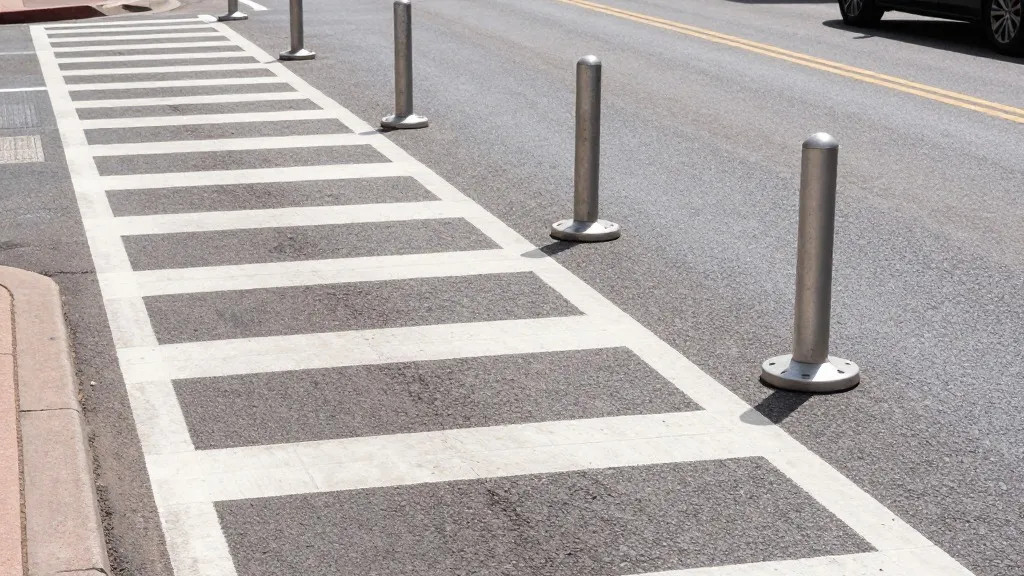
City planners in Colorado Springs have removed concrete barriers from crosswalks on West Colorado Avenue, a significant shift in a year long street redesign project. The decision follows a period of intense public scrutiny and direct feedback from residents, local businesses, and emergency services. This move marks a tangible change in how the city is handling the trial phase of the infrastructure upgrade, prioritizing real world adjustments over static planning.
The redesign of West Colorado Avenue began with a focus on lane realignment, parking adjustments, and improved safety for pedestrians. Last month, the city installed protected crosswalks as part of this initiative. However, the initial design included concrete barriers that were intended to guide foot traffic. Since their installation, city officials have monitored how the public interacts with these new features. The barriers were meant to be temporary, yet their presence quickly became a point of contention for those using the street daily.
Ryan Phipps, the city capital improvements manager, characterized the current situation as an ongoing process of testing and adjustment. He noted that the city has recently made modifications to the initial implementation. Phipps described this as an iterative process aimed at determining what works in practice versus what was anticipated on paper. The removal of the concrete barriers is a direct result of this feedback loop, where the physical environment is tweaked to better serve the people who use it.
Public comments indicated that the concrete barriers, while temporary, created solid walls that blocked sightlines for pedestrians. Phipps noted that this issue was particularly acute for shorter individuals who found themselves unable to see oncoming traffic clearly. In response to these concerns, the city decided to take the barriers out. This change aims to restore visibility and make the crosswalks feel less obstructed for the general public.
First responders also provided critical input that led to further modifications. Phipps explained that drivers attempting to pull over for emergency vehicles were sometimes creating blockades in the center pedestrian refuge areas. To address this, the city scaled back these refuge zones. The goal is to ensure that fire and police units have clear access up and down Colorado Avenue without being trapped by parked or waiting cars. This adjustment prioritizes emergency vehicle mobility while still maintaining safe crossing points for pedestrians.
Local businesses along the corridor are closely monitoring these changes, as they rely on easy customer access. Joe Kliche, manager of Centennial Cuts, a shop selling Colorado beef, highlighted the importance of reachability for his store. Kliche noted that the store is a single brick and mortar location where all cattle are raised on a family ranch in Fowler, Colorado, now in its third generation. The business draws both local shoppers and tourists, making the state of the road and parking critical to its success.
Kliche expressed a mixed reaction to the changes. He appreciates the center lane for parking, which aids in loading and unloading goods. However, his team had expected more additional parking spaces. He also described the stanchions rising in the middle of the street as a little weird. This feedback reflects the broader sentiment among business owners who are navigating the transition between the old street layout and the new design elements.
The recent updates effectively reset the trial period for this section of the avenue. City planners are now seeking further feedback to evaluate whether the new configuration is working as intended. Phipps emphasized that the changes are not necessarily corrections of mistakes but rather a search for better options. The process involves tweaking and balancing various factors to find the optimal design. The city continues to engage with the community to refine the West Colorado Avenue project.
Source: KOAA News5
More News · Centennial news · Report a business · Got a Story?