Sedona shop owner says $100 crystals may cost just $5 online
TikTok has driven 20 billion views on crystal content, but buyers in Arizona are paying premium prices for lab-grown or synthetic stones sold as natural.
By Amanda Valdez ·
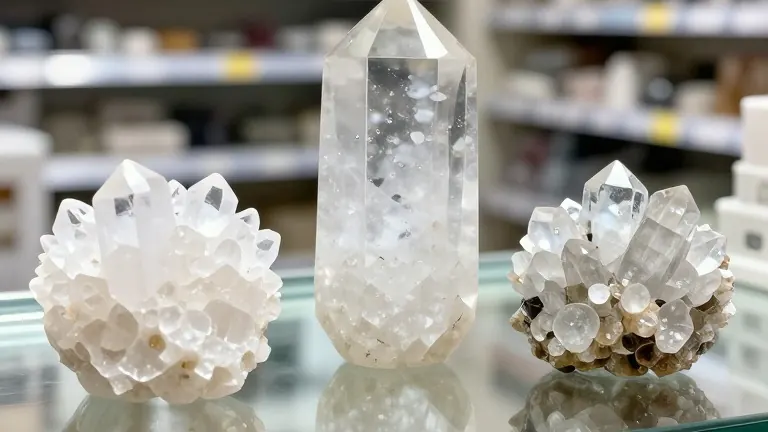
A single lab-grown crystal sold in a Sedona, Arizona, storefront for more than $100 can be purchased online for between $5 and $20, according to local shop owner Jamie Inglett.
The price discrepancy highlights the financial risk for consumers in a market that has expanded rapidly due to social media trends. The hashtag #crystals has accumulated 20 billion views on TikTok, driving demand for gemstones and mineral specimens. Inglett, who transitioned from a digital presence to a physical retail location after amassing 215,106 Instagram followers, notes that this online surge has introduced a higher volume of imitations into the physical market.
Buyers are increasingly encountering products that do not match their descriptions. Shannon Wimberly, a collector with several years of experience, stated that she has purchased fake crystals in the past and now inspects purchases more rigorously. She noted that she has run into counterfeits and adjusted her buying habits to account for the prevalence of fakes.
Inglett identifies two primary categories of misleading products. The first consists of lab-grown crystals marketed as natural stones. The second includes completely synthetic items made from plastic or glass. She explained that these lookalikes are common in retail environments, stating that shoppers will see hundreds of these items depending on the store and that they all appear similar to the untrained eye.
Experts recommend specific verification steps to distinguish genuine minerals from fakes. Inglett advises customers to ask retailers for the country of origin or the specific mine name. Physical inspection also offers clues. Glass imitations produce a different sound when struck, do not feel cold to the touch, and often display unnatural dye patterns. Fake moldavite lacks the natural grooves and textures found in genuine specimens and appears too uniform in shape.
The industry does not consider lab-grown crystals inherently problematic if sellers disclose the origin of the stone. Inglett said the issue arises when lab-grown materials are sold as natural without proper labeling. The Sedona shop owner emphasized that consumers must conduct their own research to protect their purchases.
The crystal and gemstone sector continues to grow, with physical stores and gem shows serving as key sales channels. Inglett noted that belief in crystal healing is not required to appreciate the aesthetic value of the stones. However, the market now requires buyers to distinguish between natural formations, laboratory growth, and synthetic alternatives.
Source: KCTV5
More Business · Unethical Practices · Report a business · Got a Story?