SpaceX Restores Full Speed for Ukraine's Starshield Links
Ukrainian military communications return to normal speeds after a two-week period of restrictions that hampered frontline operations and drone defenses.
By Sofia Ramirez ·

For the first time in nearly two weeks, Ukrainian military units can rely on full-speed satellite communications. President Volodymyr Zelenskyy announced on October 24 that the Starshield system is operating at its previous capacity, a development he described as critical for logistics and for countering fast-moving jet-powered drones. This restoration ends a period of significant friction that had left frontline forces with limited connectivity at high speeds.
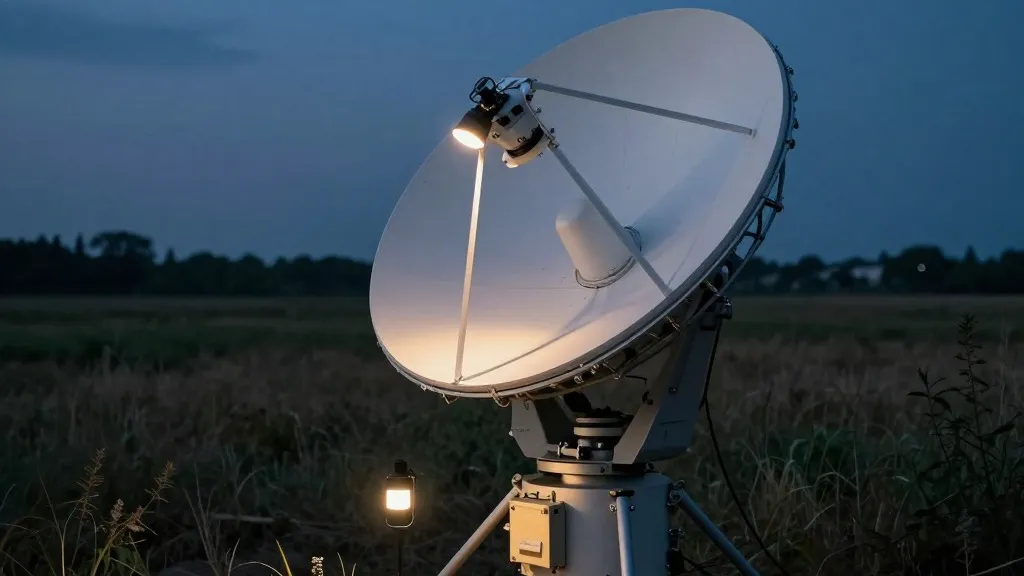
Starshield, a military service developed by Elon Musk’s SpaceX, works alongside the commercial Starlink network to support Ukraine’s operations. Defense Minister Yevheniy Khmara confirmed that monitoring systems now show stable connections for equipment traveling faster than 400 kilometers per hour. This speed threshold is vital for drone interceptors and other mobile assets, which previously lost their links when moving at just 161 kilometers per hour. Khmara attributed the resolution to direct dialogue and the president’s persistent advocacy.
The precise origin of the restrictions remains a subject of debate among officials. Serhiy Beskrestnov, an adviser on defense technology, suggested a connection to recent tensions between Kyiv and Washington, though no formal link has been established. The Trump administration maintains that the president or US government did not request the changes. Musk has stated that the government controls Starshield, with final decisions on speed and use resting with the military and President Donald Trump.
Reports indicate that Trump called Musk to urge the lifting of restrictions, after which reliability improved. While Trump declined to comment directly, he stated that he would straighten out any problems. Lawmakers from both major US parties are now pressing for clarity on who authorized the initial limits and seeking guarantees of future access for Ukrainian forces.
The communication issues arose during a broader period of strategic uncertainty. In the past fortnight, the US administration announced a deal encouraging Russian diesel exports and waived pending sanctions. Trump also urged Kyiv to pause strikes on Russian refineries, attributing high diesel prices to these attacks rather than reduced Middle East energy flows. After Russia continued its strikes, Zelenskyy declared that Ukraine was finished with unilaterally pausing attacks.
Combat operations continued through the night. Ukrainian air defenses intercepted 100 of 130 Russian drones, while strikes on 15 locations killed at least two people. In response, Ukrainian forces targeted two industrial sites and a military airport in Russia. One facility in Oryol produces components for cruise and ballistic missiles, while another in Togliatti manufactures rubber products used in solid rocket fuel.
In a separate incident, most of occupied Crimea suffered a major power outage in the early morning, affecting cities including Simferopol and Sevastopol. Authorities cited a drone attack on main power lines outside the peninsula. Ukrainian monitoring channels reported a fire at the Taman substation in Russia’s Krasnodar region, which supplies Crimea. With a fifth winter of war approaching and peace talks stalled, the reliability of such infrastructure remains a critical concern.
Source: RFE/RL