Governors: 18 to 18 split, nine battlegrounds, 19 open seats
With polls open, Democrats seek a net gain of two to end a 16-year Republican hold, facing term limits and a new map in seven states.
By Amanda Valdez ·

Voters across the nation are casting ballots on Tuesday, November 3, 2026, to determine control of 36 governorships. According to Ballotpedia, the race begins with a precise 18 to 18 split between the parties for the offices on the ballot. This balance makes every seat critical for both sides as they fight to shift the national balance of power halfway through President Donald Trump's second term. The outcome will dictate who sets the legislative agenda in statehouses for the next two years.
Nineteen of these governor races feature no incumbent on the ballot. Ballotpedia notes that 15 governors are term-limited, forcing new candidates to step into the vacuum. Three other governors, Kim Reynolds of Iowa, Tim Walz of Minnesota, and Tony Evers of Wisconsin, chose not to run for another term. In Rhode Island, Daniel McKee lost his primary, adding another open seat to the list. These vacancies create a fluid landscape where party loyalty is the primary indicator of likely outcomes, rather than the popularity of a sitting official.
Democrats are aiming for a net gain of two governorships to claim a nationwide majority. This would be a historic shift, as Republicans have held the majority of governor's offices since 2010. The Associated Press reports that Democrats are cautiously optimistic, pointing to the high cost of living and public anger over the war with Iran as key drivers. However, they face significant obstacles, including a Republican money advantage and new redistricting maps that may affect local turnout dynamics.
Ballotpedia identifies nine specific governor races as battlegrounds: Alaska, Arizona, Georgia, Iowa, Kansas, Michigan, Nevada, Ohio, and Wisconsin. In these states, the margins are tight enough that small shifts in voter behavior could change the party control of the state. The Associated Press also highlights Texas, Florida, and Iowa as competitive, noting that the high stakes have drawn intense national attention. These races are not just about local policy but serve as bellwethers for the broader midterm election.
In Georgia, Republican health care executive Rick Jackson is facing Democratic former Atlanta Mayor Keisha Lance Bottoms. They are running to succeed Brian Kemp, who is term-limited. This race is particularly watched because Georgia has been a key swing state in recent national elections. Bottoms brings a long history of local governance, while Jackson leans on the Republican brand and national party support. The outcome here will signal how well the parties can compete in a state that Trump won in 2024.
In Nevada, Republican Governor Joe Lombardo is challenging Democratic Attorney General Aaron Ford. The Associated Press notes that this race is competitive, with both candidates focusing on the state's economy and housing affordability. Nevada has historically leaned Democratic, but the 2024 election results suggest the state is closer than it has been in years. Ford is running on a message of accountability and economic growth, while Lombardo emphasizes experience and fiscal responsibility. The tight margin makes this a crucial test for the national parties.
In Ohio, Republican Vivek Ramaswamy is competing against Democrat Amy Acton. Ramaswamy's campaign faced recent backlash over an ad featuring Acton's estranged mother, which the Associated Press notes added a personal dimension to the race. Ohio is one of the states using a new congressional map after mid-decade redistricting, which could influence the alignment of local and national politics. Acton is focusing on the cost of living, a top concern for voters according to the AP, while Ramaswamy highlights his background in business and technology.
Democrats are defending five governorships in states that Trump won in 2024: Arizona, Kansas, Michigan, Pennsylvania, and Wisconsin. In Arizona, Katie Hobbs is running for re-election, facing a tough environment in a state that has trended Republican in recent cycles. In Michigan, the race is also tight, with the state using a new map that could affect turnout. Republicans are defending two governorships in states that Harris won in 2024: New Hampshire and Vermont. In New Hampshire, Kelly Ayotte is running for re-election, while in Vermont, Phil Scott is seeking another term. These races highlight the complexity of the 2026 landscape, where party lines do not always align with national trends.
The financial disparity between the parties is a major factor in these races. The Associated Press reports that Republican committees outraised and outspent Democratic committees, helped by Trump-affiliated groups and Elon Musk. At the candidate level, however, Democrats outraised their opponents. This split in fundraising reflects the broader strategy of the parties: Republicans are focusing on national brands and high-profile endorsements, while Democrats are investing in local campaigns and grassroots organizing. The impact of this spending on the final vote count will be a key metric for analysts in the coming days.
Redistricting has also played a role in shaping the governor races. Six states, including California, Florida, Missouri, North Carolina, Tennessee, and Texas, are using new congressional maps. Ohio is also using a new map. These changes could affect the composition of the electorate and the way campaigns are structured. The Associated Press notes that while Republicans hoped to use redistricting to beat the midterm pattern, the new districts in Florida and elsewhere may not vote as drawn. This uncertainty adds another layer of complexity to an already volatile election cycle.
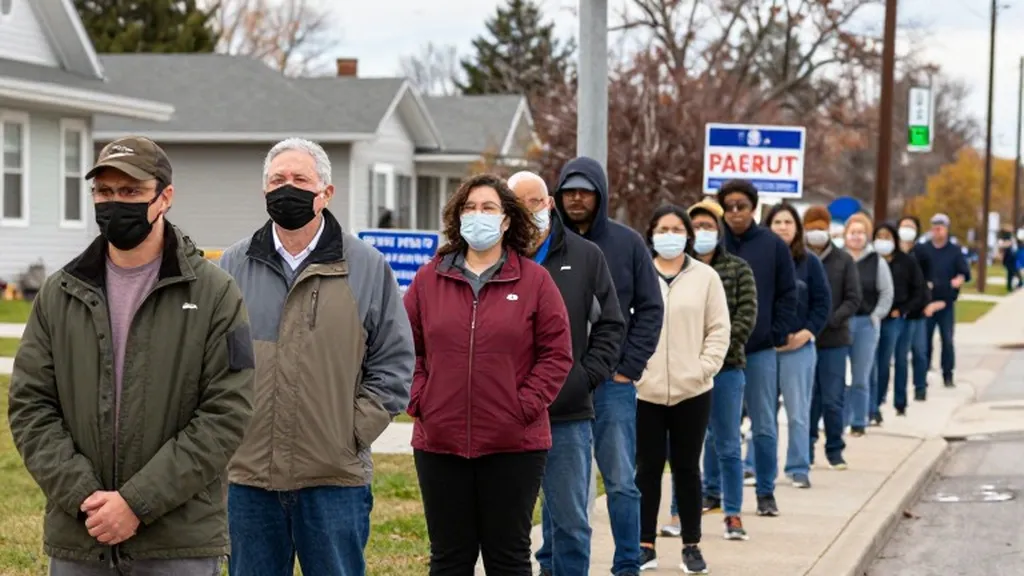
As polls open, voters are heading to the polls in large numbers. More than 57 million people had already voted as of Monday, surpassing the early vote of four years ago in many closely watched states. The Associated Press describes the election as a referendum on Trump's second term, with voters struggling with high prices and angry over the war with Iran. The result of the 36 governor races will not only determine state leadership but also provide a clear signal of the public's mood heading into the final two years of the Trump administration.